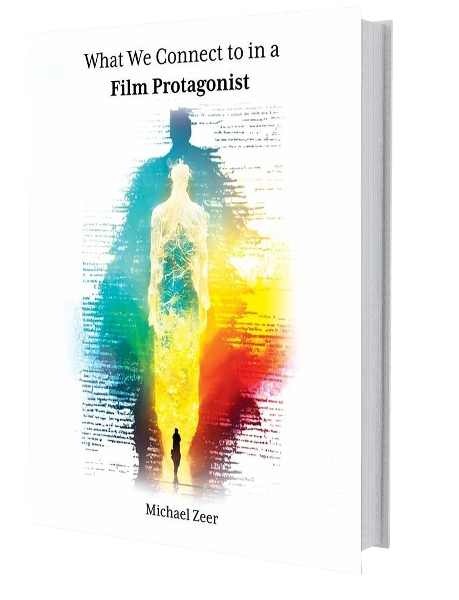
There can be many reasons not to like a film a protagonist. Only there is a way to get an entire audience to maintain sympathy for a protagonist. If we hate a protagonist’s mysoginistic views one might imagine some would find it difficult to sympathize with the protagonist. But using what I call a “position” (an internal problem) can prevent viewers from abandoning their sympathy for such a protagonist if, and, only if, no characters challenges a protagonist’s position. Think of an audience as a third party listening to an argument? A viewer may lose their sympathy for a protagonist. Is effective acting, directing, good writing important as well? This goes without saying. The theory does not tell you what kind of story, characters you choose to use? Absolutely not,
How we Connect to a Protagonist
Hypothetical film: A wealthy man is unfairly charged with the murder of his wife. He escapes from the authorities and goes looking for the real killer. Most of us would feel sympathy for him. But let’s change him to a Quaker minister who is forbidden by his religion to ever use violence. Now two problems emerge: to find the killer, and the minister to overcome his aversion to violence to be able to capture the killer. The minister’s aversion to violence problems suddenly makes it more difficult goal to find the killer of his wife. And if he finds the killer will he use violence? This creates more audience tension. So, a position we disagree with yet can capture us. for the reasons described above.
What is of critical importance is that even viewers who adamantly disagree with the minister’s position feel sorry for him being controlled by his adherence to his faith. In this way a director can capture an entire audience.
Tension.
Tension is not difficult to create, surprising twists and turns, etc… immediately captivates us. But the problem becomes finding new ways to create interesting tension. The tension comes, the problem is resolved, audience tension is released. But when we connect to the minister’s position all the minister’s frustration is transferred to us and the problem the cause of his frustration yet still exists. However, let’s look at the role secondary characters play in creating the opportunities to frustrate the minister. For all, and we never really quite see it, all secondary characters hold a contrary position. Secondary characters job is not to argue with a protagonist but to act in a contrary manner to the ministers position. There are many ways to achieve this that you will find in the 17 film examples.
So creating say a building suddenly being blow up creates tension. Whereas an inarguable aversion to use violence accumulates audience tension. How does this play out? In the final quarter of the film cracks form in the minister’s position. This is great for directors, for they not are controlling the audience, the moment the minister decides to use violence.
Even if a viewer would never agree with religious edict preventing violence the viewer will yet understand the difficulty of the minister overcoming his position. For this viewer an interesting question will emerge – will the minister ultimately use violence? As long as the minister refuses to use violence, over time the audience will need the minister to reverse his if only to relieve the audience’s tension. The audience moves their attention from the physical obstacles, goals he must overcome to the minister’s inarguable position.
The release of audience accumulated tension is a powerful transformative moment.
Never the less, a visual argument is taking place. For each secondary character holds the contrary position. How this is done you must read the film analyses. What is interesting is that audiences do not see the actions of the secondary as attacking the protagonists. This battle remains hidden for reasons you will find in the book.
Nearing the end of the 17 films the audience’s accumulated tension reaches a point where the audience needs relief from all their accumulated tension.
There is more to the theory and a few rules but this strategy is used exactly in the same way in each of these award winning 17 films.
How do we connect to a protagonist? Well, it’s not hard initially to grab an audience. Only we want a shared journey with a protagonist with an internal problem (a position). We see the resistance of a protagonist through their frustration. Although we don’t see the strategy, the protagonist’s tension is passed to us. The other characters are yet important, but as the progresses we focus more on the protagonist reversing their position
What I have come to learn is that everything in these successful films must FIT a protagonist’s position. Age, looks, environment, etc.. films FITS, including the the protagonist. What we don’t know about a protagonist we invent our own reasons. If argument over a protagonist’s position is absent we invent our own reasons for the minister’s reluctance to use violence. Maybe he became a Quaker when a friend was murdered, maybe his father was a minister, etc…
I offer a 30 day full refund if you find the theory faulty or not useful in your work. I also suggest this book for directors and actors, for it reveals a heretofore unseen purpose in each scene and a predetermined ending.
I suggest to first read the analysis then watch the film.
List of the protagonists position in the 17 films.
- The Shawshank Redemption: I will never believe I can exist out of prison
- Scarface: I will never ccbetray a business partner
- Manhattan: I will never have a serious relationship with an underage girl
- Midnight Run: I will always follow the rules
- The Hurt Locker: I will never see myself different from the others
- Romancing the Stone: I will never accept an imperfect man
- Shallow Hal: I will only accept a beautiful woman
- Lost in Translation: I will never overcome my depression
- Chinatown: No one is above the law
- Goodfellas: I will never rat out my mobster partners
- Avatar: I will never go against the company I work for
- Groundhog Day: I will never accept simple, unambitious people
- Planes, Trains and Automobiles: I will never make a friend of a stranger
- Primal Fear: I will never allow to be controlled
- Casablanca: I will never get over my prior relationship
- The Fugitive: Sometimes you have to take the law into your hands
- Up in the Air: I will never fall in love
Library of Congress #
If you have any questions email me or chat on Whatsapp: